
Shopping Cart
- Dekorasyon
- 236 views
What is a rehal?
A rehal is a low, small wooden stand that holds the Quran or another book open for reading while seated. At home or in a mosque, it keeps the back and neck upright, brings the page closer to eye level, and frees both hands. Finding the right one comes down to three questions: where and how you'll sit to use it, what size fits that position, and which material holds up for years without warping. Someone reading cross-legged on a floor cushion should treat height as the deciding factor; someone using a table or console should look at depth and width instead. Material affects lifespan as much as looks — solid wood resists warping even as its tone shifts, while thin veneered panels wear faster in humid rooms. A stand that moves between rooms or lives in a cupboard is easier to manage with a lightweight, knock-down frame. Short daily reading only needs something light; hours-long memorization sessions call for a sturdier frame and a comfortable angle.
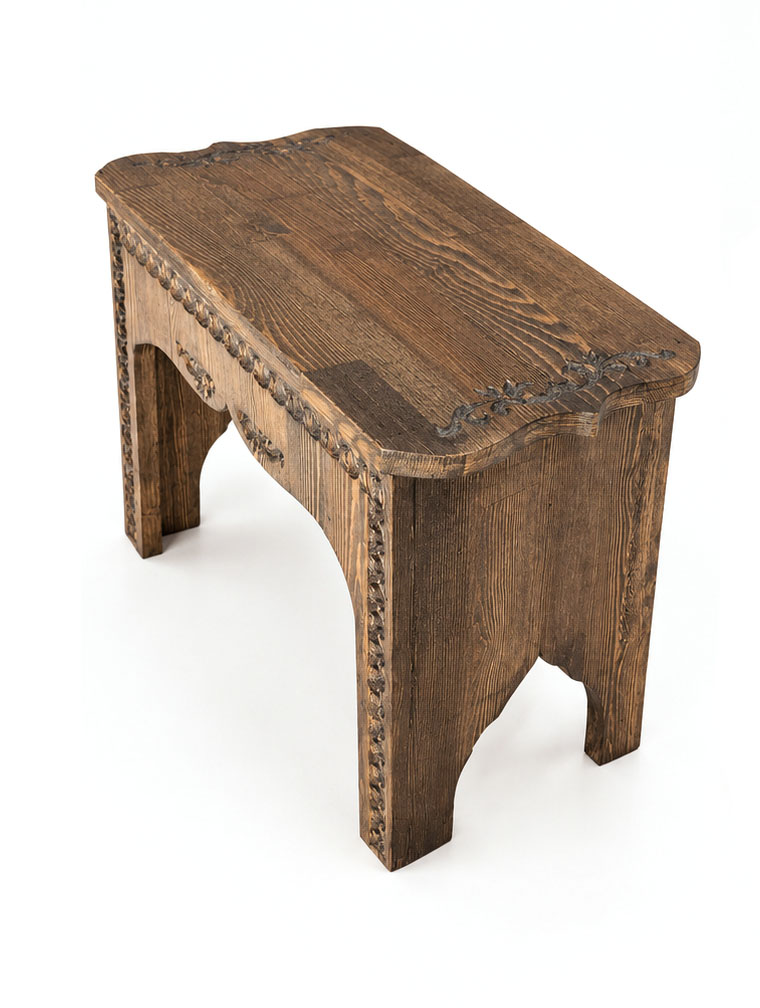
- 58 × 30 × 43 cm (22.8 × 11.8 × 16.9 in) — width × depth × height from the floor
- AA-grade solid panel wood, walnut tone
- 5 kg (11 lb), knock-down frame
- Separate shelf for the Quran
What is the Quran reading stand called?
The wooden stand used to hold the Quran open for reading is called a rehal, also spelled rahle. The word has Arabic roots and has carried the same meaning in Turkish for centuries; in English it sits alongside everyday descriptions like "Quran reading stand" or "Quran stand." Reference sources and product listings tend to use rehal as the specific term, since it names one particular design rather than book stands in general. The large, mosque-sized versions used in congregational spaces carry the same name — only the measurements differ from the models made for home use.
How do you choose a rehal?
Choosing a wooden Quran stand starts with where and how you'll sit; size and material follow from that choice, and portability is worth weighing on its own. Here are four checkpoints to check before you buy.
Seating position
Reading cross-legged on a floor cushion calls for a low, wide-based stand. Reading from a chair or sofa only needs a compact rehal that rests on a table or console. Switching between the two favors a light, one-piece frame.
Size
A rehal's width and depth should match the Quran or book placed on it; height from the floor depends on how you sit. For floor-cushion reading, around 43 cm (about 17 in) keeps the knees from crowding and holds a comfortable angle.
Material
A rehal made from AA-grade solid panel wood is finished in a walnut tone, then sealed with varnish and polish. That grade, knot-free and evenly grained, is easy to tell apart from thin-veneered or particleboard frames, and the finish limits moisture reaching the wood.
Portability
A rehal around 5 kg (11 lb) that knocks down flat is easy to carry and store, useful if it moves between rooms or gets put away between prayer times. In shared spaces, the same frame simplifies stacking several at once.
Together, these checkpoints cover how to choose a Quran stand that fits how you sit and read.
What size should a rehal be?
The right rehal size depends on where and how you'll use it — there's no single mandatory standard. Match your seating position against the table below.
| How you sit | Measurement to check | Note |
|---|---|---|
| Cross-legged on a floor cushion | Height from the floor | About 43 cm (17 in) keeps a comfortable knee and back angle; cushion thickness can shift this by a few centimeters |
| On a table or console | Width and depth | The table's own height does the work, so the rehal's base just needs to fit the tabletop |
| Congregational use in a mosque or Quran course | Weight and knock-down ability | Moving and stacking many stands at once matters more than exact size |
The solid-panel rehal made in Architab's Cappadocia (Türkiye) workshop measures 58 cm wide, 30 cm deep and 43 cm high (22.8 × 11.8 × 16.9 in) and weighs 5 kg (11 lb). The carved pattern is cut by CNC and finished by hand — see the sizing and construction details on the handcrafted solid wood rehal page. For a growing child, or for reading sessions that run for hours, a height-adjustable Quran reading table offers more flexibility than a rehal's fixed height.
What are the types of rehal?
Rehal types split mainly by how they're used: on the floor or on a table, standing free or folding flat. These four are what you'll most often find in shops.
Floor rehal
A floor rehal is built for cross-legged floor-cushion reading, with a wide base and low height for stability. It's the most common form in both homes and mosques.
Tabletop Quran stand
A tabletop Quran stand is a more compact type, set on a table or console for anyone reading from a chair or sofa. Height matters less here, since the table itself sets that.
Legged rehal
A legged rehal has fixed or folding legs attached to its frame, standing free of the floor — a comfortable option even on hard flooring.
Folding rehal
A folding rehal has two panels joined by a hinge or interlocking teeth, so it lies flat when not in use — practical for anyone short on storage space.
Mosque-sized rehals go beyond these four, with a larger, heavier frame sized for congregational use and larger mushaf volumes.
Solid wood or MDF: how to tell the difference?
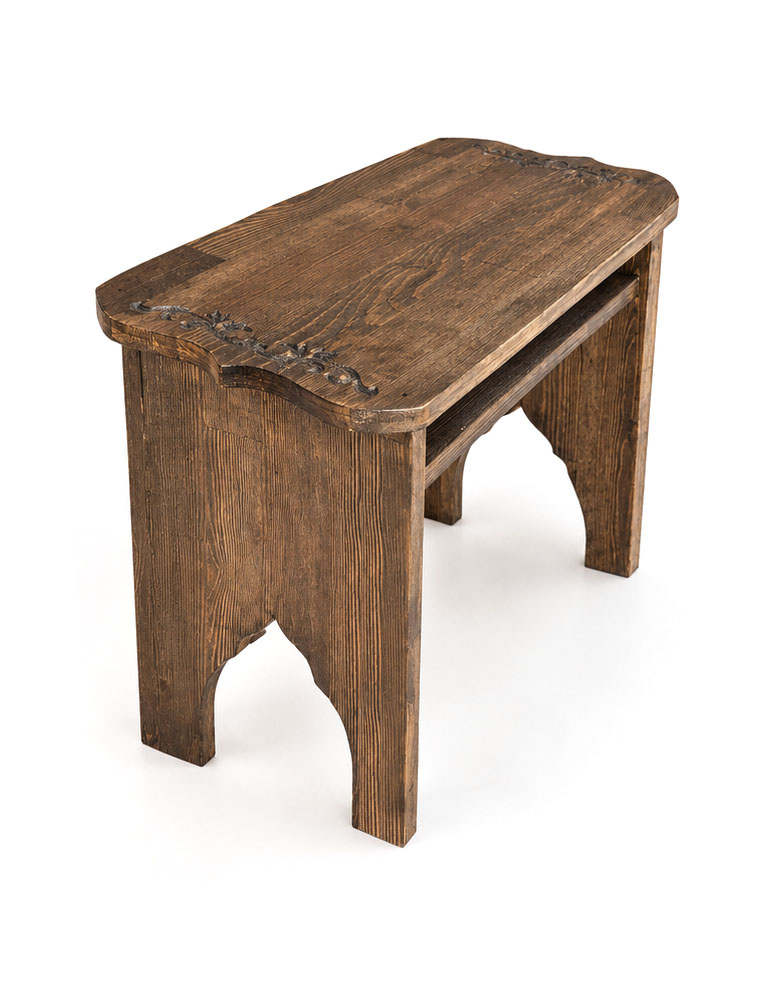
Solid wood and MDF are easiest to tell apart by looking at the edge, not the surface. On a solid panel, the grain pattern continues unbroken from the face onto the edge; on a veneered or MDF panel, a thin strip of different material shows along that same edge. Weight is the second clue — a solid-wood frame feels noticeably heavier in the hand, and the difference is obvious the moment you pick it up. Checking these two details is the fastest way to judge a wooden Quran stand's material, useful when buying secondhand.
How do you care for a wooden rehal?
A wooden rehal is cleaned by wiping it with a damp, soft cloth; detergent or alcohol-based cleaners will dull the varnish and polish over time. A dry cloth handles dust, and for a deeper mark, dampen the cloth lightly and dry the spot right away. Keep the rehal away from radiators and sun-facing windowsills, since sudden swings in heat and humidity can crack the wood. Anyone who'd rather keep the Quran covered between sessions can look at a rehal with a Quran storage box, which combines the stand and a lidded box in one piece.
A short history of the rehal
According to the Rahle entry in the TDV Encyclopedia of Islam (İslâm Ansiklopedisi), craftsmen in Anatolia under Seljuk rule built two-winged rehals that opened and closed on interlocking wooden teeth, a joinery method close to kündekari (interlocking woodwork joined without nails or glue). Ottoman-era rehals were later decorated with inlaid mother-of-pearl, tortoiseshell and ivory, and were often endowed to mosques and shrines together with a copy of the Quran. A rehal frame coming off a CNC router today still has sharp edges; workshop hands sand those edges smooth before the varnish-and-polish stage. The machine now handles part of a centuries-old hand-carving tradition — the final touch is still done by hand.
Quick questions about the rehal
What is a rehal called in English?
No single English word covers it — usually a Quran stand or Quran reading stand, though rehal (or rahle) is this design's specific name.
What size rehal do I need for floor seating?
For reading cross-legged on a floor cushion, look for a height around 43 cm (17 in) from the floor; that keeps the knees and back at a comfortable angle.
How do I clean a wooden rehal?
Wipe it with a soft, slightly damp cloth and dry it right away. Skip detergent and alcohol-based cleaners, which dull the varnish over time.
Is a rehal only for the Quran?
No. Its sloped top works for any book read while seated, though its size and angle are built around the Quran's typical dimensions.
This rehal is handmade in Architab's Cappadocia workshop and ships internationally — sizing and construction details are on the product page.
The wooden Quran stand and rehal collection also includes other workshop-made pieces that pair well with a rehal.