
Shopping Cart
- Dekorasyon
- 254 views
What is a tip box?
A tip box is a container placed on a counter or checkout desk where customers leave a voluntary tip for the staff who served them. You'll see one on a cafe counter, next to a restaurant register, on a hotel front desk, or by the mirror in a barbershop. Businesses use a separate container instead of folding tips into the cash drawer for a simple reason: it keeps the register clean, and it gives a customer holding loose change or a small note an obvious place to leave it without asking anyone to handle it. In Turkish, the same object is called a "bahşiş kutusu", literally a tip box, and the term covers the same idea across cafes, restaurants and hotels in Türkiye. The box is usually small and lockable, sometimes with a clear window so the contents stay visible. No one has to ask for a tip; a customer who wants to leave one simply does.
- Also called: tip jar, gratuity box
- Common terms: tip box (English), bahşiş kutusu (Turkish)
- Typical placement: counter, checkout desk, register, front desk
- Purpose: collects voluntary tips separately from cash sales
The tip box meaning stays the same everywhere; tip jar, tip box and gratuity box just describe regional habits around the same object.
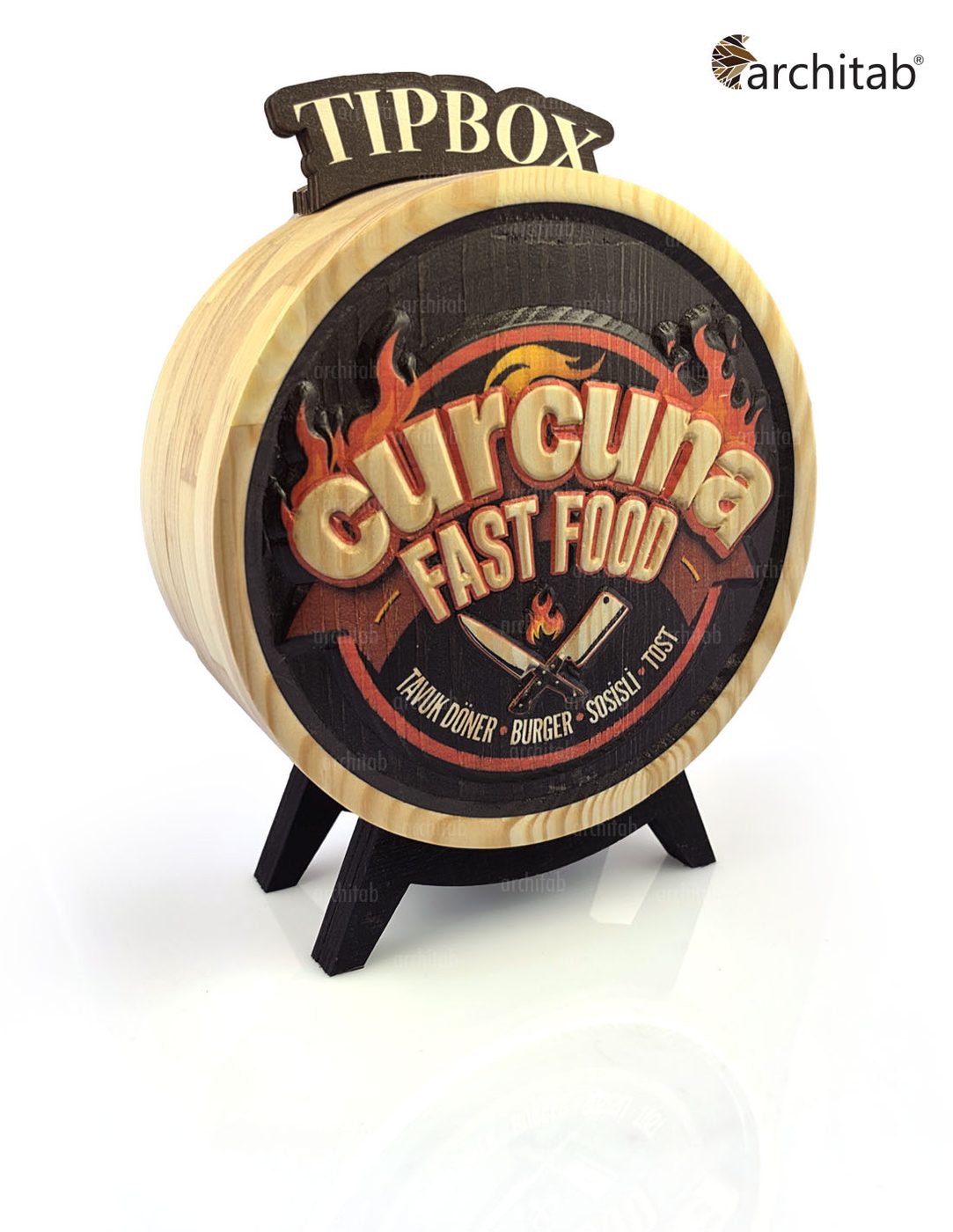
Tip box or tip jar: what is the difference?
A tip box and a tip jar do the same job, but the words point to different shapes and, often, different parts of the world. In the United States, "tip jar" usually means a plain glass jar by the register. "Tip box" more often describes a closed, sometimes locked container in wood or acrylic, found in cafes and restaurants that want something sturdier than a jar. "Gratuity box" shows up mostly in formal writing. In Türkiye, the English term has been absorbed as a single word, "tipbox", printed that way on boxes and shop signs regardless of shape.
It's worth keeping a tip box apart from a piggy bank: a piggy bank is closed for long-term saving, while a tip box is opened and emptied regularly by staff. Our retro TV tip box plays on the piggy-bank look but still works as a daily tip box. For the full range, see our wooden tip box collection.
Does "tip" stand for "To Insure Promptitude"?
No. "Tip" is not short for "To Insure Promptitude", even though the story is repeated often enough that many people assume it must be true. The same explanation circulates widely in English too, turning up on posters, in bar trivia and in casual conversation. Etymologists regard it as a backronym: a phrase invented after the fact to explain a word that already existed, rather than the word's real origin. According to the Online Etymology Dictionary (etymonline.com), the verb "tip", meaning to give money for a service, was already in use in the early 18th century, well before the acronym story appears in print. The acronym itself has a logic problem too: it should use "ensure", not "insure". Timeline and wording both point the same way. "Tip" is simply an old English word for a small gift of money, not an abbreviation of anything.
How does a tip jar actually work?
A tip jar works mainly through visibility and convenience, not persuasion. Placed where a customer is already standing, at the register or the counter, it catches attention at the exact moment someone has change or a small note in hand and nowhere obvious to put it. Coins and small bills are easy to drop in without breaking the flow of paying. Seeing that other customers have already left something adds a mild social-proof effect, a partly full box tends to draw more than an empty one. None of this requires staff to ask, which is why many businesses prefer it to a verbal request at checkout.
Where do tips from the box go?
Tips collected in a box usually go into a pool that staff split according to a rule agreed on beforehand. A common approach is opening the box together at the end of a shift, so everyone sees the total. Some businesses empty it weekly rather than daily and keep a simple record of who received what and when; a notebook or a phone note is usually enough. Splitting can follow headcount or hours worked. What tends to work is agreeing on the rule before the money starts coming in. Rules on tips and tip pooling vary by country, so check local regulations or ask your accountant before setting a formal policy.
Is tipping expected in Türkiye?
Tipping in Türkiye is common but not obligatory, and no one will treat a customer differently for skipping it. In cafes and pastry shops, it's an ordinary habit to leave loose change in the box after paying, especially when the bill is settled in cash. As card payments have become the everyday norm, less cash passes through customers' hands, so fewer coins end up in the box overall. Some businesses adjust by keeping the tip box clearly visible near the register, as a quiet reminder rather than a request. For a visitor from abroad, the takeaway is simple: a tip box on the counter is normal, and leaving nothing is not going to raise an eyebrow.
What makes a tip box last in daily use?
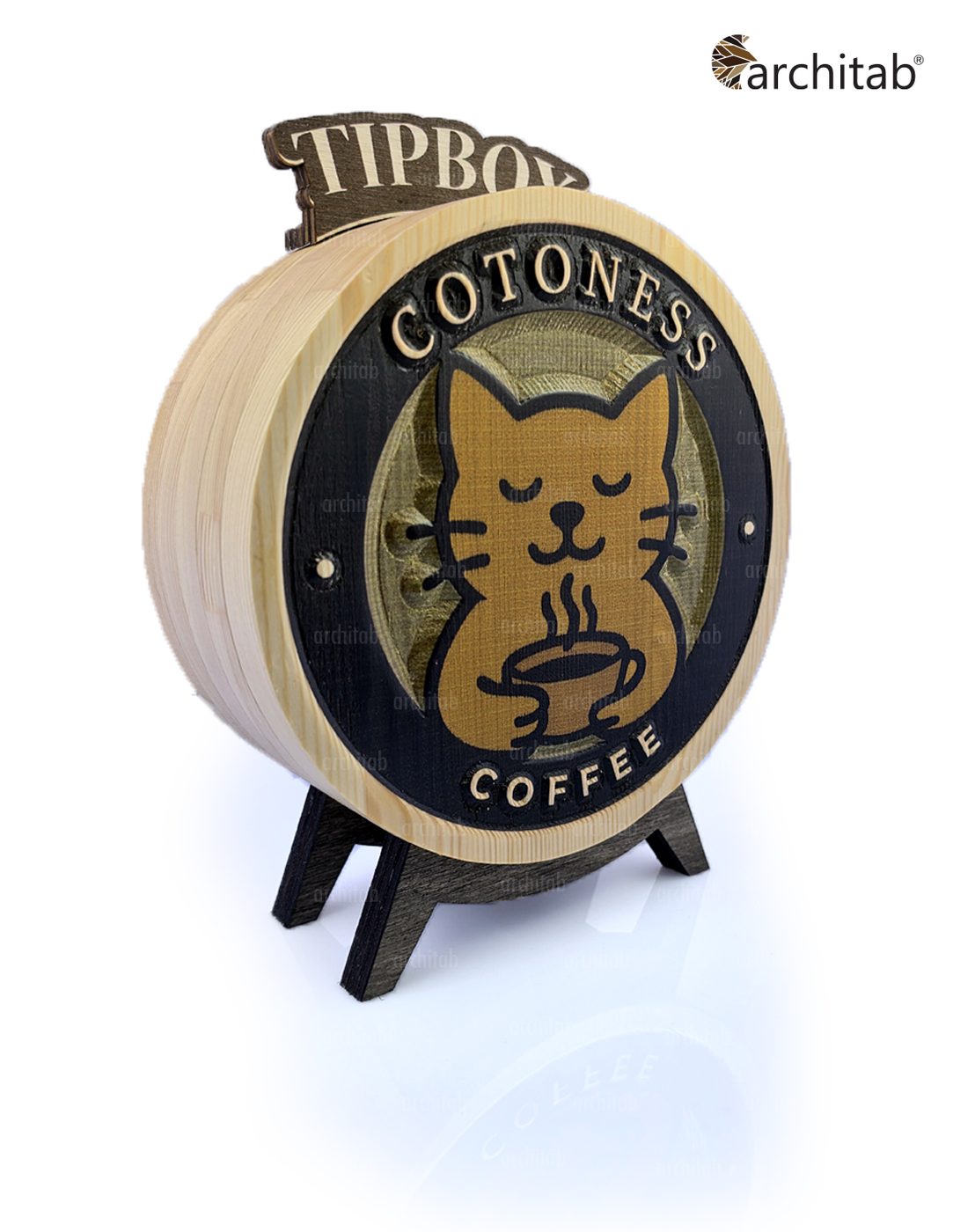
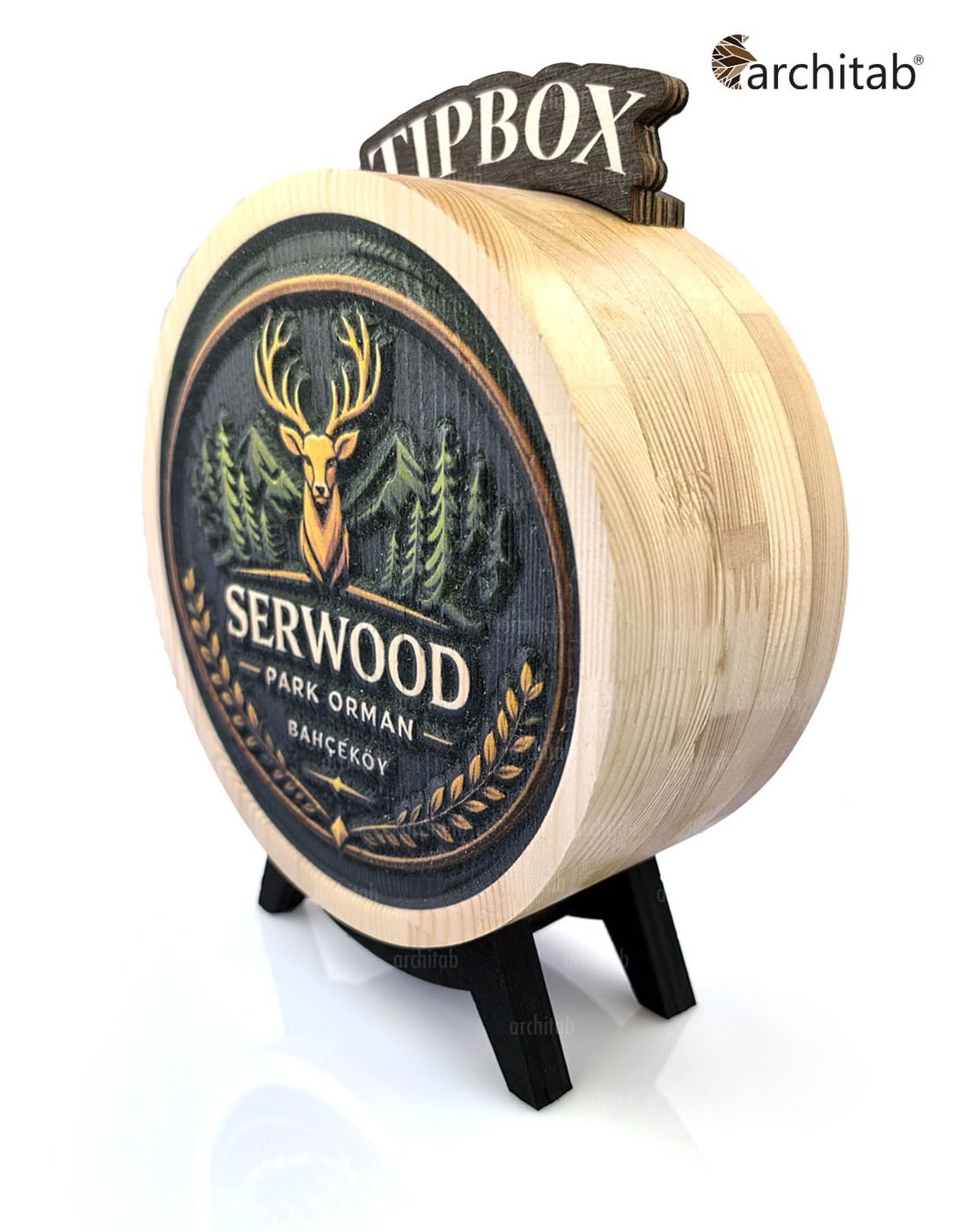
A few construction details decide whether a tip box survives daily use or falls apart within a season. A solid pine body keeps its shape on a counter that gets wiped or splashed, unlike thinner panels that can warp. A carved, hand-colored logo doesn't peel off the way a printed sticker does, and a wooden stand keeps the box from tipping when the counter gets bumped. Our own boxes measure 20 cm diameter x 8.5 cm high (7.9 in x 3.3 in) and weigh 1.0 kg (2.2 lb); see our wooden tip box collection for the full comparison, or the custom logo wooden tip box for your own logo carved in.
Frequently asked questions
What is a tip box?
A tip box is a small container on a counter or checkout desk where customers leave a voluntary tip for the staff who served them. It's common in cafes, restaurants, hotels and barbershops, and in Turkish it's called a "bahşiş kutusu", the same idea under a different name.
What is the difference between a tip box and a tip jar?
A tip jar usually means a plain glass jar, while a tip box describes a closed or lockable container in wood or acrylic. Both collect voluntary tips, and the terms are often used interchangeably in everyday speech.
Does "tip" stand for "to insure promptitude"?
No, that explanation is a backronym invented after the word was already in use. The verb "tip", meaning to give money for good service, was recorded in English in the early 18th century, before the acronym story appears in print.
Where do tips from a tip box go?
In most businesses, tips are pooled and split among staff by a rule agreed on beforehand, often by headcount or hours worked. Rules on tips and tip pooling vary by country, so check local regulations or ask an accountant before setting a formal policy.
Made in a small workshop in Türkiye
Every tip box we make is carved, colored and assembled by hand in our workshop in Cappadocia, Türkiye, using solid pine rather than printed panels. We ship finished boxes abroad regularly, so a cafe outside Türkiye can order one the same way a local business does. The full range is in our wooden tip box collection.